
Australia’s Nature Repair Market was Never Meant to be an Offsets Scheme
David Zhang | Climate & Environment Fellow

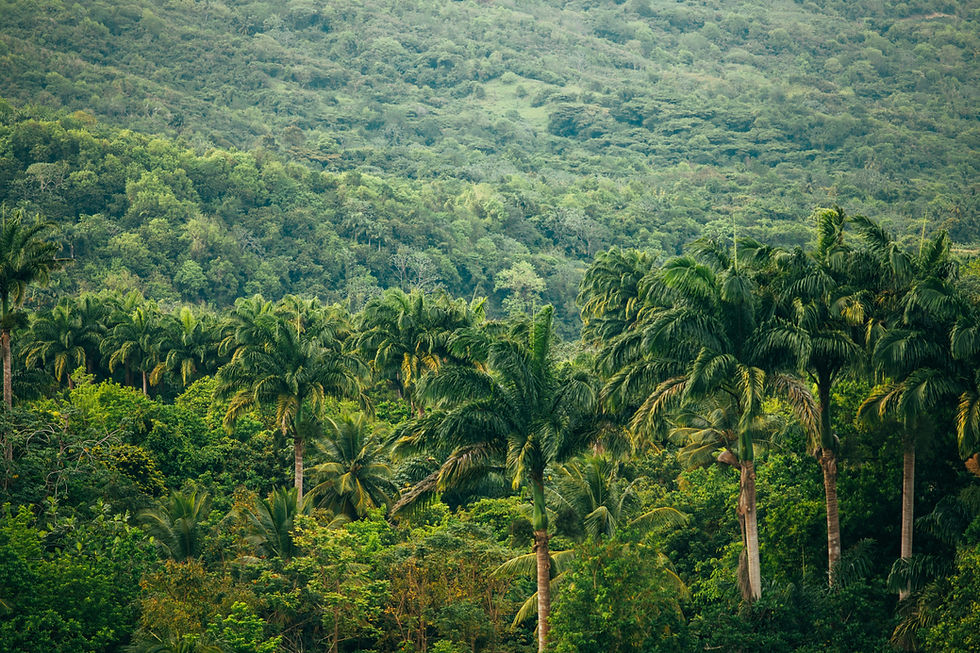
Image sourced from Eclipse Chasers via Pexels
In 2023 Australia legislated the world’s first national biodiversity market. Landholders who restore or protect nature earn certificates, and various entities buy them voluntarily. It was an attempt to address the long-term decline in Australian biodiversity identified by the 2021 State of the Environment Report, and to draw private investment into restoration as Australia committed to protecting 30 per cent of its land by 2030 in line with the Kunming-Montreal Global Biodiversity Framework.
A key condition of the Nature Repair Act 2023 was that the certificates were never to be used in offsetting environmental damage elsewhere. That prohibition is what secured Greens support, and the private land conservation sector insisted on it, with the Australian Land Conservation Alliance telling Parliament that offsets are ‘fundamentally inconsistent’ with the concept of nature repair.
Now, prohibition on using certificates as offsets is being removed. Reforms passed in November 2025 allow certificates to be used as offsets, with the changes to commence by December 2026.
A global test for Australia’s market
On 19 October, the biodiversity COP opens in Yerevan, Armenia for the first global review against the Kunming-Montreal targets. The review takes stock of how countries are paying for nature, with Australia’s flagship biodiversity market among the mechanisms on display. Three weeks later, Australia takes the chair as President of Negotiations at COP31 in Antalya, Türkiye. It will arrive at both having legislated away the safeguard that made the environmental scheme distinctive.
A developer whose project will damage something protected under federal environmental law has to compensate for that damage to achieve a net gain. It can now do that by buying a biodiversity certificate. However, a certificate only qualifies if the method it was created under — the rulebook setting out how that kind of project must be run — expressly permits it, so the shift arrives method by method rather than all at once. Reinforcing the change is a new statutory body, the Restoration Contributions Holder (RCH), which takes developers’ payments and spends the pooled money on restoration. A voluntary restoration market becomes the supply side of a compliance regime.
In all fairness, allowing offsetting answers a real problem. Since inception, the Nature Repair Market has remained small: one method and only a handful of projects. Voluntary demand remained limited, and offsetting provided the fastest way to generate it.
No fungibility for frogs and koalas
Weak demand should have been a signal about what was being sold, not just an obstacle to overcome. Market mechanisms work when the thing being traded can be measured in a common unit, a feature called fungibility. For carbon, a tonne of it is a tonne wherever it is emitted, which is one reason carbon markets can operate across different locations.
For biodiversity, that is different. A restored woodland three hundred kilometres away is not the population that was cleared. Extinction does not reverse, ecosystems have thresholds, and there is no straightforward exchange rate between the ecological value of a green and golden bell frog, a koala, and a dollar figure.
Rules like net gain and like-for-like are attempts to supply by regulation the equivalence that the underlying thing does not have. They are therefore difficult to design, and the legislation already permits a departure from like-for-like where a decisionmaker is satisfied that a greater benefit will result.
The integrity lesson
Even where counting the unit is sound, Australia spent years arguing about whether its carbon credits represented real abatement. The dispute ran to a government-commissioned review under Ian Chubb and turned on whether credited regeneration was happening at all, or would have happened anyway without the payment, the latter a concept known as ‘additionality’. Carbon was the tractable case: a single measurable gas, tradeable anywhere, and it still took roughly a decade of method-writing and revision to arrive at a framework people had confidence in. The biodiversity market, run by the same regulator, now applied the same concept without the comparable history of testing and refining behind carbon-credit methods.
The reforms do contain integrity safeguards, some of which are already in force. The new National Environmental Protection Agency is operating, the first four national standards have been made, including one on environmental offsets that sets out eight principles an offset must satisfy, and a power is coming to declare certain impacts off-limits entirely — though it is left to regulations to say which.
However, the principles do not attach to the payment of a restoration contribution charge, which is expressly excluded from the definition of an offset activity. The money goes to the RCH, which is obliged to keep a public register and report annually, but nothing requires what it buys to be additional, like-for-like, or in place before the damage occurs. Of the routes available, the one carrying none of the eight principles is the one where the developer simply writes a cheque and walks away.
Two numbers, not one
Restoration finance and offsetting should stay legally and publicly distinct, with separate accounting when Australia reports on progress against the Global Biodiversity Framework. Money spent repairing nature and money spent permitting its destruction are clearly not the same contribution. A single total conceals that difference and can make progress on biodiversity appear greater than it is.
This matters beyond Australia, because going first means the design will become the reference for those who follow, with the European Commission already building a nature credits framework of its own. Australia legislated something that is genuinely a first, on a condition its own Parliament thought essential. From December, the law will let it become an offsets scheme after all.
David is a final-year Bachelor of Laws student at the University of Sydney, where he has also completed a Bachelor of Economics. He is interested in how economics, law, and international cooperation can be harnessed to confront climate change and drive the energy transition. This is driven by a conviction that a stable climate is not a policy choice but a precondition for basic human rights, aligning with his broader work on First Nations advocacy, refugee support, and gender equality.
He spent three years as an Associate in Commodities and Environmental Markets at the Commonwealth Bank of Australia, helping build carbon markets as a nascent asset class alongside fast-evolving policy. A semester exchange at the University of Copenhagen studying sustainable development and economic policy offered a working contrast to Australia, showing him an economy centred on environmental sustainability.
Disclaimer: The views and opinions expressed in this article are those of the author, and do not necessarily reflect the views and opinions of Young Australians in International Affairs. AI tools were used by this author for grammar checks and idea refinement, but all content is original, and no plagiarism has been used in the preparation of this article.

Comments