
Career Spotlight: Sabrina Kim
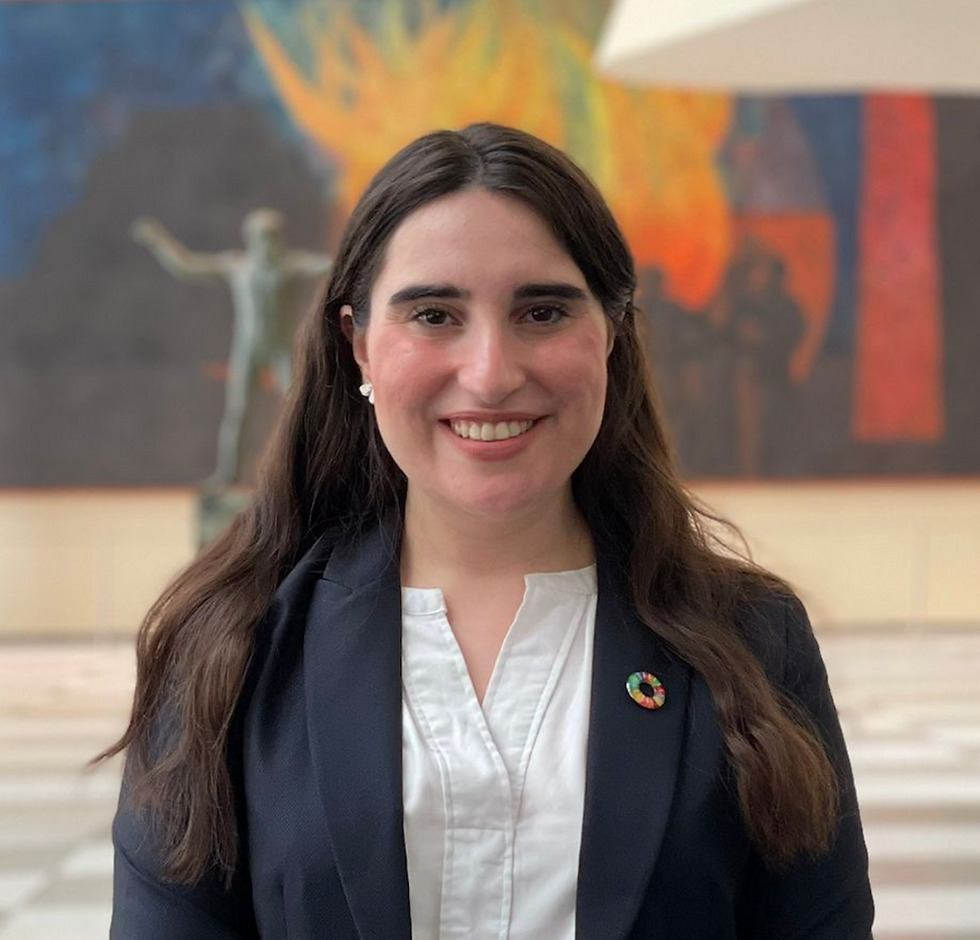
In this career spotlight, we have the pleasure of speaking with Sabrina Kim, a Junior Professional Officer at the United Nations. Sabrina reflects on her experiences at the United Nations and in the Australian Public Service, and the value of pursuing a career addressing global challenges.

Sabrina Kim is a Junior Professional Officer (JPO) in the Executive Office of the Secretary-General at the United Nations Secretariat in New York City. Sabrina previously worked in the Australian Department of Foreign Affairs and Trade, and the Australian Department of Education. She holds a Master of Diplomacy and Bachelor of International Relations from the Australian National University. She is passionate about addressing global policy challenges through multilateral cooperation.
The views expressed herein are those of the author(s) and do not necessarily reflect the views of the United Nations.
You are currently a JPO in the Office of the Executive Office of the Secretary-General in the United Nations Secretariat. What is a JPO and what does your role entail?
The UN Junior Professional Officer (JPO) Program provides opportunities for young professionals to gain hands-on experience in international affairs. A JPO’s role can vary depending on what organisation you land in and your own skills that you bring, but essentially it’s to support the advancement of the organisation’s mandate. I’m lucky enough to be in the Executive Office of the Secretary-General in New York, supporting the Secretary-General and Under Secretary-General for Policy. My specific role is within the Team for Pact Implementation, where I provide strategic policy advice to the Secretary-General and senior leadership to advance the Pact for the Future, a landmark agreement adopted by world leaders.
It’s an incredible privilege to be at the heart of the UN Secretariat, working with experts from across the system to turn high-level global commitments into tangible action for the future.
Wow, the JPO Program sounds like a fabulous opportunity for young professionals to gain experience working in multilateral organisations. At the same time, it is a big step to move across the world for a new role and leave your current position. Did you receive any advice when you were considering applying for the role that’s stuck with you? What advice would you give someone considering applying to a JPO position?
One piece of advice I received was not to wait until you feel 100 per cent ready to apply. Opportunities like the JPO Programme are designed for people who are still learning and developing.
The idea of moving overseas and joining a multilateral organisation for the first time was intimidating, but I think it’s important to remind yourself that growth often comes from stepping outside your comfort zone. Looking back, the experience has been incredibly rewarding, both professionally and personally. Working in an international environment, collaborating with diverse colleagues, and contributing to global priorities has broadened my perspective and strengthened my skills.
My advice to young people considering a JPO role or similar opportunities is not to rule yourself out because you think you lack experience. The skills, perspectives, and values you've gained through your studies, work, and life experiences are often more valuable than you realise. Be open to taking calculated risks and embracing uncertainty.
I imagine working at the UN is a very rewarding experience, but it also brings with it challenges. Can you elaborate on any challenges you’ve faced so far, how you’ve overcome them, and any lessons you’ve learned?
One of the biggest challenges has been navigating the complexity of a large multilateral organisation. The UN brings together a wide range of multistakeholder partners, perspectives and priorities, which means progress can often take longer than you might expect. Early on, I had to adjust my expectations. What has helped me overcome these challenges is approaching them with curiosity rather than frustration. The diversity of perspectives within the UN is one of its greatest strengths, and it has pushed me to think more critically and collaboratively.
Working in the hustle-and-bustle of New York City must be exhilarating but also, at times, a bit draining. How do you find the balance and switch off?
New York is an incredible place to live and work. The energy and diversity from every corner of the world are part of what make it such an amazing city. That said, the pace can be intense. We’re also more connected than ever before, and especially for young professionals, I think it’s easy to feel like you constantly have to make yourself available, which comes with the risk of overworking.
I try to be intentional about creating space to recharge. For me, maintaining balance comes down to setting boundaries and making time for the activities and people that help me disconnect from work. One of the ways I switch off is by spending time outdoors away from screens, whether that's exploring different neighbourhoods or walking through Central Park. I make a conscious effort to stay connected with family and friends, especially loved ones back in Australia. Having those connections helps keep me grounded and provides perspective outside of work.
You previously worked in the Australian Public Service on multilateral issues. How did you find your experience, and why should young people passionate about international affairs consider pursuing a career in the public sector?
My experience was incredibly valuable and provided a strong foundation for my current role. Working on multilateral issues gave me the opportunity to engage with complex global challenges while contributing to Australia's international priorities. The public service offers a unique chance to work at the intersection of policy, diplomacy, and implementation, while being part of a larger effort to advance the public good.
For young people passionate about international affairs, I would strongly encourage being open to a career in the public sector. It can provide exposure to these issues early in your career, while also helping you build transferable skills in policy, stakeholder engagement, strategic thinking, and negotiation.
A career in the public sector can also open doors to opportunities beyond government. Personally, the APS offered both a rewarding career and also an excellent platform for developing the skills, knowledge, and networks that have supported my journey in international affairs.
You obtained your Master’s Degree in Diplomacy from the Australian National University while working full-time. What encouraged you to pursue the Master's? How did you find your experience, and what insights would you give someone balancing work and study?
I wanted to widen my understanding of the international system in a more formal setting outside of my work and beyond what my undergraduate degree offered. What I found most appealing about the master’s program was its practical focus, as most of the lecturers were former diplomats and practitioners from field offices of multilateral organisations, governments, and NGOs.
Balancing demanding full-time work with study was certainly challenging at times! But it was a great investment for my professional development – for example, without it, I wouldn’t have been able to apply for my JPO position. The experience required strong time management and organisation, but I benefited from being able to immediately apply what I learned in class to my work, and vice versa.
One lesson I learned is that you don’t need to do everything perfectly. There will always be competing priorities, but it's important to focus on consistency. For anyone considering postgraduate study while working, I would encourage them to view it as a long-term investment in themselves.
International affairs was historically, and to an extent still is, a white, male-dominated field. Based on your experiences, what would you tell someone who doesn’t fit those characteristics and wants to work in the field?
Don’t let that deter you from pursuing a career in this space. Your background, identity, and lived experiences are not obstacles – they’re assets that can contribute to more inclusive decision-making and stronger outcomes. One of the greatest strengths of international affairs is the diversity of perspectives and ideas that people bring to the table. The global challenges we face are complex, and they cannot be effectively addressed by a narrow range of voices.
It's important to acknowledge that there is still a long way to go in achieving equality and equity. Women and girls, people who identify as LGBTQIA+, Indigenous Peoples, people of colour and different nationalities that are not Anglo-Saxon, people with disabilities, and other underrepresented groups continue to face systemic barriers to participating in this field and are often less represented in senior leadership positions across the sector. I believe that meaningful change often happens from the inside out. By entering these spaces and contributing your perspective, you become part of the change you want to see.
I also recommend trying to find your community. Seek out mentors, peers, and professional networks that will support and encourage you along the way. You don't have to navigate the journey alone, and your voice deserves to be part of the conversation.
The UN commemorated its 80th anniversary last year. In that time, it has undoubtedly made the world more secure, sustainable, and just. At the same time, it could be more effective and efficient. What are the biggest opportunities you see for young people interested in working at the UN?
The UN is working to evolve to meet the complex global challenges of today and the future, and I think that creates tremendous opportunities for young professionals. Today's international organisations need people who are adaptable, collaborative, and comfortable working across cultures, disciplines, and technologies. Young people often bring fresh perspectives, innovative ideas, and a willingness to challenge established ways of thinking, which is essential as the UN continues to modernise and improve its effectiveness.
I hope young people don’t underestimate the value of your perspective or experience, even if you're early in your career. If you're passionate about international cooperation and creating positive change, there is a place for you to contribute. The most successful young professionals are often those who remain curious, embrace continuous learning, and are willing to step forward when opportunities arise.


Comments