
Memphis, Tennessee: The Cost of AI Expansion and Community Resistance in the US
Isabelle Powell | United States Fellow

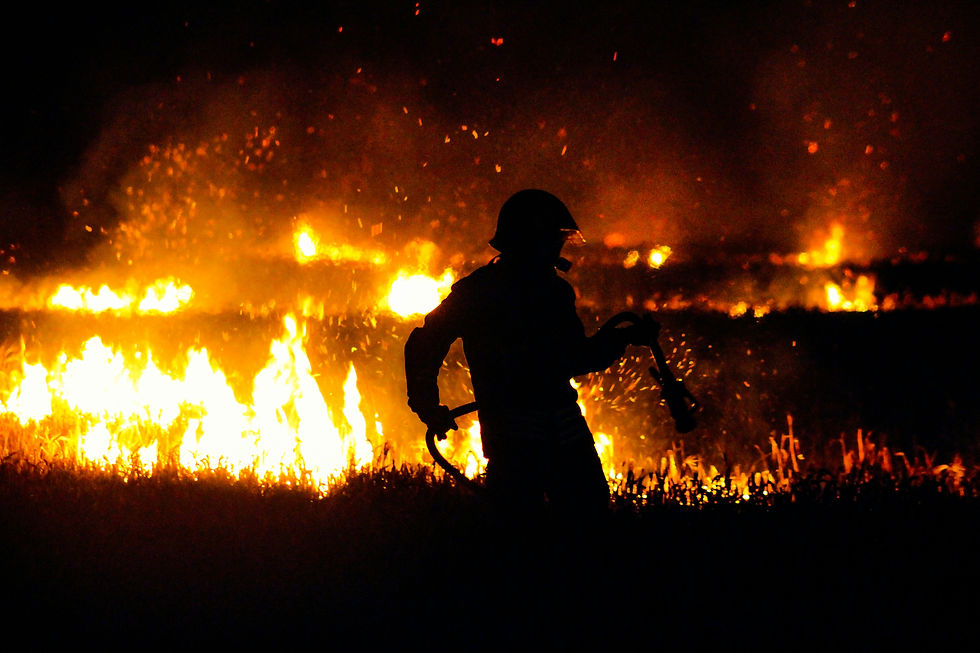
Image sourced from Project 290 via Unsplash
In Memphis, Tennessee, thousands of residents and local civil society organisations are challenging the broader political and economic pressures that are driving environmental degradation. Memphis was selected as the site for Elon Musk’s xAI data centre expansion to power Grok, despite the industrial pollution affecting the historically Black community of Boxtown. Local leaders and residents are mobilising against the unregulated use of methane gas turbines powering the rapid expansion of data centres in the Artificial Intelligence (AI) revolution. Communities increasingly bear the environmental, economic and health costs of data centre expansion. Amidst federal gridlock, activism in Memphis highlights the growing need to challenge the disproportionate influence of technology companies like xAI in this era of rapid technological expansion.
Environmental Impacts in South Memphis
Elon Musk is swiftly advancing AI, necessitating data centre construction in communities like Memphis with a median income level of USD $37,000. The Colossus data centre in South Memphis requires 150MW of energy, the same needed to power 100,000 homes and 1 to 1.5 million gallons of water per day to cool the supercomputer. Research indicates that computing facilities of this magnitude can negatively impact both the environment and air quality safety; emitting substantial quantities of smog-forming nitrogen oxides (NOx) and hazardous air pollutants (HAP). The health affects of these pollutants are linked to respiratory diseases, heart problems, asthma and certain cancers.
Crucially, this reliance on environmentally intensive infrastructure comes at a time when sustainable energy industries are experiencing significant growth worldwide. In 2023, the US clean energy sector added 149,000 jobs, while globally, renewable energy industries supported over 16 million positions by 2024. Rather than supporting an expanding green economy, the rapid deployment of methane in South Memphis represents a stark divergence from sustainable local development, leaving community groups to demand that xAI operations be held accountable for the growing public health impacts.
NAACP Lawsuit
Amidst a landscape of federal deregulation and economic interests dictating policy, communities in South Memphis are strong in their collective action. Action groups including Tennessee for All, Memphis Community Against Pollution (MCAP), the NAACP and Southern Environmental Law Center (SELC) are leading opposition against this type of executive overreach. The NAACP filed a lawsuit in April 2026 against xAI over its use of methane turbines to power its Colossus 2 data centre in South Memphis, citing violations against the Clean Air Act and use of gas turbines without the necessary regulatory permits. The lawsuit seeks emergency court intervention to halt unauthorised emissions. However, the Trump Administration and the Justice Department argue in defence of xAI that the United States has the right to decide when to enforce the Clean Air Act. In addition, they argue that xAI Chatbot Grok, which is powered by Colossus 2 data centre, is essential to support national security and therefore justifies the environmental and health impacts on communities in Memphis.
Corporate Influence and Political Landscape
The ongoing crisis in Memphis reflects the growing influence of corporations within US politics. Behind national security are deeper economic alliances driving political decision-making. Increasingly, political contributions from oil and tech are aligning with systemic shifts in federal deregulation. Financial data illustrates a growing trend of corporate influence within the political system. For example, President Trump's 2025 Presidential Inauguration broke fundraising records, receiving USD$245 million in contributions, doubling the staggering USD$88 million for his inauguration in 2017.
In April 2024, Trump held a private dinner at Mar-a-Lago with top oil executives, asking oil and gas industries to raise USD $1 billion for his campaign. In just his first 100 days in Office, the administration took approximately 145 action to reverse environmental rules, more than in his entire first term. Inaugural committees are not subject to federal contribution restrictions, making fundraising a powerful avenue for wealthy oil and tech elites to influence political outcomes, foregrounding a situation where communities like Memphis remain vulnerable to the immense financial resources of large corporations.
Shifting Financial and Environmental Burdens
While federal policies tilt toward industry and commerce over environmental protection, the environmental burden is increasingly placed on citizens. In March 2026, the Trump administration continued an agenda of environmental rollback by paying French energy company TotalEnergies USD$1 billion to terminate a windfarm contract on the US east coast. Meanwhile, the White House executive orders maintain that the Administration is producing ‘the cleanest energy in the world’. This demonstrates a clear tension between the administration’s environmental goals and its policy decisions.
Toward a Green Future
Despite a fractured political landscape, a way forward to a green future is clear, but requires action on both a local and legislative level. Climate science remains clear: to mitigate the worst impacts of climate change, emissions must be reduced by half by 2030, to reach net-zero by 2050. Yet the Trump Administration and Big Tech continue to pursue rapid economic and technological expansion, while communities such as those in South Memphis bear many of the associated environmental costs. The situation Tennessee serves as a micro-level case study in global environmental politics, proving that when formal state protections fracture under the weight of corporate capture, civic mobilisation is a crucial counterweight. Technological innovation and economic growth should never come at the cost of human lives or environmental protection. As the international community navigates rapid technological development of AI and robotics, sub-national community advocacy in places like Memphis, Tennessee must be regarded as vital governance mechanisms.
Isabelle is a graduate of the University of Sydney, where she earned a degree in Politics and International Relations. Her global perspective has been shaped by living, studying and working across Australia, the United States, the United Kingdom, the Middle East and Southeast Asia.
She has worked in immigration centres in Sydney and Portland, USA, supporting refugees and survivors of human trafficking and gender-based violence. Isabelle is the director of Stories of America, a documentary currently in post-production that draws on field research interviews across Oregon to explore migration, national identity and political polarisation in the United States.
In January, she joined the Office of Senator Bernie Sanders in Washington D.C., as a Press and Digital Communications Intern. With a particular interest in democracy and political economy, Isabelle looks forward to contributing thoughtful, globally informed analysis of American domestic and foreign policy during the Fellowship.
Disclaimer: The views and opinions expressed in this article are those of the author, and do not necessarily reflect the views and opinions of Young Australians in International Affairs. AI tools were used by this author for grammar checks and idea refinement, but all content is original, and no plagiarism has been used in the preparation of this article.


Comments