
Redefining Resilience in Australian Foreign Policy
Max Martin | Australian Foreign Policy Fellow
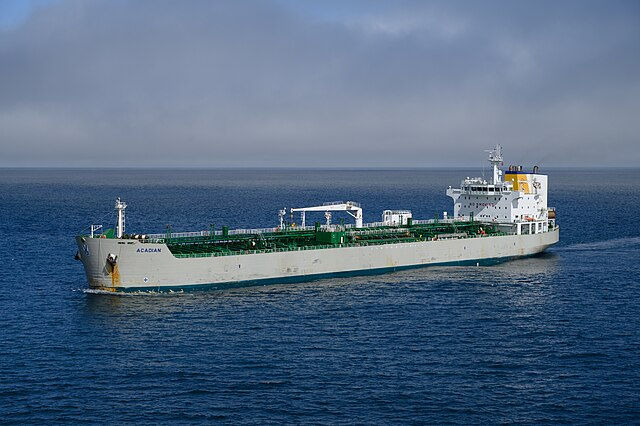
Following Operation Epic Fury and the subsequent disruptions to oil shipments through the Strait
of Hormuz, most Australians would now be acutely aware that Australia imports around 90 per cent of its liquid fuel from overseas. In years past, this would not have been viewed as a strategic concern, but simply the byproduct of an efficient globalised economy. Yet in an increasingly fragmented and uncertain international environment, vulnerabilities once accepted in the name of efficiency are now being re-evaluated through the lens of national resilience.
Disruptions in the Middle East are already being felt by everyday Australians through high fuel prices. At the same time, surging fertilizer costs threaten to impose longer-term strain on the agricultural sector. Australia’s geographic isolation and reliance on extended maritime trade routes place it at the end of many global supply chains, leaving the country particularly vulnerable when geopolitical shocks disrupt the flow of critical goods.
Australia must move beyond viewing resilience solely through a military lens. This will require leveraging diplomatic relationships to secure critical goods while accepting trade-offs, including shifting from the most economically efficient supply chains to those that are more secure and less exposed to geopolitical risk.
Resilience Through Partnership
Building resilience in an uncertain world will require Australia to view diplomatic relationships not merely as instruments of goodwill, but as strategic assets that can help secure access to critical goods and services during times of disruption.
Prime Minister Anthony Albanese’s visit to Singapore reflects this reality. Amid continued instability in the Middle East, Australia and Singapore agreed to make “maximum efforts” to meet each other’s fuel and gas needs. This demonstrates the value of investing in diplomatic relationships before crises emerge so they can be relied upon when strategic conditions deteriorate. Crucially, this arrangement reflects mutual strategic dependence, with Australia relying on Singapore’s regional energy infrastructure while Singapore remains dependent on Australian liquefied natural gas.
This model of reciprocal strategic dependence with close diplomatic partners should serve as a blueprint. By remaining strategically indispensable to trusted partners, Australia can strengthen the likelihood that those relationships endure when strategic conditions deteriorate. A similar logic can be applied to Australia’s relationship with the United States (US) in the critical minerals sector. Following Washington’s growing recognition that China has cornered much of the global critical minerals market, Australia has positioned itself as a key partner in efforts to secure allied supply chains. This is exemplified by the bilateral critical minerals agreement signed in 2025. Replicating this approach across other strategic sectors will be vital to ensuring Australia’s key dependencies rest with trusted partners rather than vulnerable external supply chains.
Resilience Through Autonomy
While diplomatic partnerships can mitigate vulnerability, true resilience also requires Australia to reduce critical dependencies where possible. Energy remains one of Australia’s clearest strategic weaknesses, with Australia’s fuel security reliant in part on the stability of the 167-kilometre-long Strait of Hormuz, an isolated maritime chokepoint half a world away whose disruption has already reverberated through domestic fuel markets.
In this context, Opposition Leader Angus Taylor’s call that Australia “drill, drill, drill” is strategically short-sighted, mistaking greater exposure to fossil fuel markets for genuine energy security. Not only would this deepen Australia’s dependence on a volatile global commodity market, but it would tie Australia more closely to an energy model that much of the world is steadily moving away from. Though progress toward decarbonisation may be uneven, the long-term direction of travel is clear, and efforts to resist this transition risk leaving Australia economically and strategically behind the curve.
Instead, Australia should continue accelerating its renewable energy transition as part of a broader resilience strategy. Critics of this approach, such as Andrew Hastie, argue that accelerating the renewable transition means “building a dependency into our power grid” through reliance on imported renewable infrastructure, much of which is manufactured in China. Yet as global demand for renewable infrastructure grows and more nations seek alternatives to Chinese supply, diversification is likely to follow. Rather than passively waiting for this shift, Australia should seek to lead it, working with allies and partners to help build the trusted supply chains that will underpin the next generation of global energy systems.
Resilience Through Sacrifice?
Richard Bush, writing on Taiwan’s strategic dilemma, has questioned whether a society can simultaneously enjoy “the good life” and maintain the level of security required in an increasingly dangerous world. While Australia’s strategic circumstances differ significantly from Taiwan’s, the sentiment underpinning Bush’s argument is one Australian strategists should consider. Building resilience will inevitably require Australians to accept that greater preparedness and security cannot come without cost.
Developing strategic reserves, diversifying supply chains, subsidising strategic industries, and increasing defence spending all require trade-offs. As Marc Ablong recently noted, Australia remains overly committed to “short-term comfort” at the expense of meaningful long-term preparedness. Yet if Australia is serious about resilience, this mindset must change. Preparing for disruption will always appear inefficient in times of peace, but the cost of readiness is far lower than the price of scrambling once crisis arrives.
The era of easy prosperity and strategic complacency is fading. If Australia is serious about resilience, it must recognise that preparing for disruption will come at a cost. In a more volatile and uncertain world, the greatest risk lies in failing to prepare at all.
Max is completing his Master of Arts in International Relations at the Johns Hopkins School of Advanced International Studies (SAIS), where he is a Ramsay Postgraduate Scholar. He spent his first year at SAIS Europe in Bologna before moving to the Washington, DC campus for his final year.
Originally from Perth, he graduated from the University of Western Australia with a Bachelor of Commerce in Economics and Finance. A semester abroad at the Vrije Universiteit Amsterdam strengthened his interest in international affairs and motivated further study.
Max recently interned at the Australian Embassy in Bangkok, gaining experience in the political and economic sections at one of Australia’s largest overseas posts. His academic interests focus on the intersection of economics and strategy and how states respond to an evolving global landscape.
Through this Fellowship, he hopes to contribute to public debate on Australia’s foreign policy priorities, challenges, and long-term strategic choices.
Disclaimer: The views and opinions expressed in this article are those of the author, and do not necessarily reflect the views and opinions of Young Australians in International Affairs. All content is original, and no plagiarism has been used in the preparation of this article. No AI tools were used by this author in the preparation of the article.



Comments