
The United States’ Strangulation of an Island Nation: Cuba in Despair
Olivia Wearing | Latin America Fellow

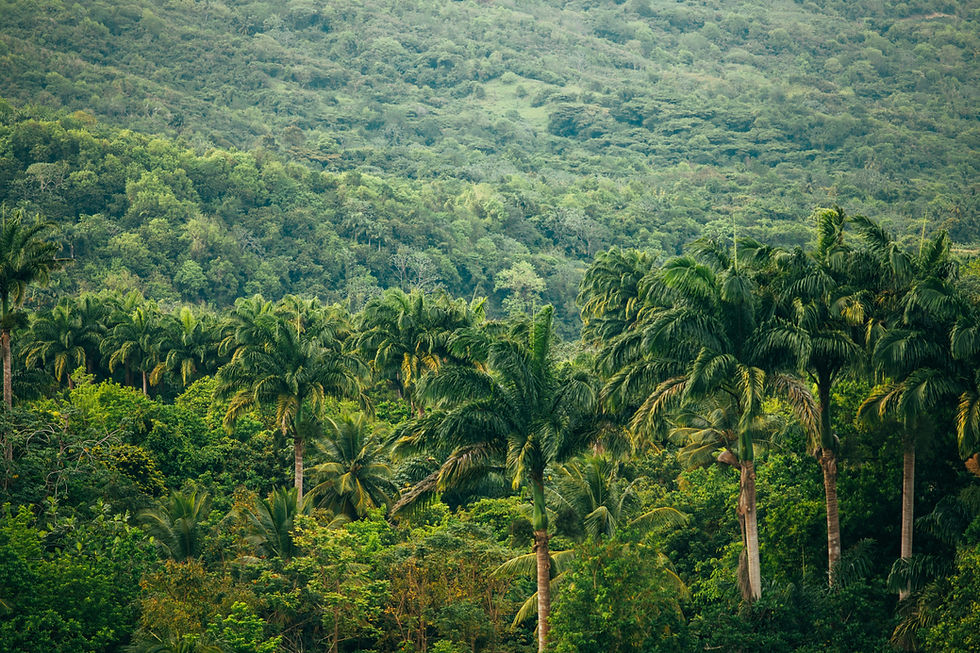
Image sourced from Dennis Schmidt via Unsplash
Cuba and the U.S. have had a strained relationship since the 1959 Cuban revolution, with the island nation facing a decades-long U.S. embargo. The temperature on this tension has been turned all the way up since the executive order published by the White House on 29 January 2026 in which the U.S. President Donald Trump described the Cuban government as being an ‘unusual and extraordinary threat’ and threatened external states with tariffs should they interfere by providing fuel to Cuba. Since February, the Caribbean island has endured severe food and water shortages along with disruptions to medical services and public transport. By mid-May, daily blackouts were exceeding 20 hours. This strangulation of Cuba’s economy, and thus its people, has been met with limited reaction from other states and as the living situation worsens for locals, the island is in dire need of effective humanitarian aid. If the U.S.’ imperial approach continues unchecked, its reach threatens to expand while the lives of Cubans remain in jeopardy.
In a recent interview, Cuba’s President Miguel Diaz-Canal asserted his belief that the U.S. was ‘betting on’ three possible scenarios in its pressure campaign against the island: fomenting social unrest, assuming control of the economy, or launching a military campaign. His assertion is evidenced by the fallout of the U.S.’s capture of Venezuelan President Maduro in January. Venezuela has historically been the closest ally to Cuba in the region, sending approximately 35,000 barrels of oil a day to Cuba before the abduction of its president. It has since ceased to be a source of fuel, directly impacting Cuba’s economy since the island only produces approximately 40% of the crude oil it requires. The most recent delivery of fuel arrived from Russia in late March.
Carlos de Cossio, Cuba’s Deputy Foreign Minister, addressed the unlawfulness of the U.S.’ disregard for human life on X in February, stating the U.S. was ‘applying threats and coercive measures’ and that the reduction of fuel harms transport, medicine, education, food, and standard of living. These conditions have caused a rapidly growing trend in Cuban emigration over the past two years, including a recent interception of 108 Cubans in one day by Brazilian police, as desperation pushes many to relocate.
The information being released from Cuba proves the direct and tragic impact on medical services, as UN High Commissioner for Human Rights Volker Turk noted on 8 June, the victims of this blockade are the most vulnerable. There is an estimated backlog of 96,387 people awaiting surgery, over 11 thousand of these being minors, as well as a doubling of the infant mortality rate. Additionally, Cubans have seen a significant increase in spoilage of food before reaching households as a result of insufficient refrigeration, as well as limited access to clean water. This growing food crisis is likely to result in malnutrition and sickness amid potential illnesses brought about by hurricane conditions, as seen in the catastrophic consequences of Hurricane Melissa. It is thus imperative that other states intervene in the humanitarian crisis before the population is afflicted by additional environmental challenges.
The leaders of Spain, Mexico, and Brazil issued a joint statement in April which they condemned ‘the dire situation’ and called for respect for sovereignty and international law, taking minimal tangible action to increase energy supplies. This ineffectual condemnation provides the U.S. President with clear reinforcement that his audacity and callousness will not be met with severe consequences and if he so wishes, he can have ‘the honour’ of taking whatever nation he pleases. The current situation calls for tangible consequences by intergovernmental organisations for the U.S. government’s inhumane treatment of Cuba, beyond simply verbal condemnation of its actions. Regrettably, however, this puts states at risk of U.S. sanctions. The U.S.’s veto power in the UN Security Council, as well as the unparalleled trading power of the U.S. Dollar, creates an unfair dynamic whereby other states are at the mercy of Trump should they take further action.
This begs the question: what is the ambition of the U.S.’s interference in Cuba? While the U.S.’s fixation on Cuba predates Trump, the aim seems to be to protect U.S. security interests and challenge regimes that are deemed as dangerous. U.S. Ambassador to the UN, Mike Waltz, claimed in a Fox News interview that there are Chinese and Russian sites collecting information around the U.S. military bases in Cuba, posing a national security threat. This deflection from the U.S.’s damaging interference is dangerous; the issue at hand is not the legitimacy of Cuba’s government, it is U.S.’s unlawful and inhumane intervention on Cuban lives.
Most recently, a UN General Assembly took place on 7 July which considered whether the embargo should be terminated. The recorded vote saw 136 members in favour of ending the embargo. While Waltz redirected the blame to the Cuban regime for the humanitarian crisis on the island, his speech was met with disdain. Multiple UN member countries pointed out violations of principles of the UN Charter, namely sovereign equality and non-intervention. While this disapproval is a step in the right direction, tangible action must be applied to remove this blockade. Without serious intervention whereby international law is implemented, as well as an influx of humanitarian aid,
Trump’s imperial approach will likely continue.
Olivia Wearing is a student at RMIT University in her final semester of completing a Bachelor of International Studies. She has a strong interest in linguistics, particularly the Spanish language and also Latin American history and culture, especially given the current influence of the US government in politics within the region.
Having spent a semester studying at Universidad de Carlos III in Madrid, her interest only grew as she deepened her understanding of Latin American contribution to the world with its natural riches and unique cultures.
Olivia has gained a more personal insight into the experiences and push-pull factors of Latin American migration to Australia through working as an intern at SisterWorks Inc., which is a non-profit social enterprise dedicated to supporting migrant, refugee, and asylum-seeking women with employment and economic independence.
Olivia looks forward to contributing considered and informed analysis of issues within the region and their implications globally during this fellowship.
Disclaimer: The views and opinions expressed in this article are those of the author, and do not necessarily reflect the views and opinions of Young Australians in International Affairs. AI tools were not used by this author. All content is original, and no plagiarism has been used in the preparation of this article.


Comments