
Why Cuba Could Resist the United States’ Pressure Campaign
Mia Ruddock | United States Fellow

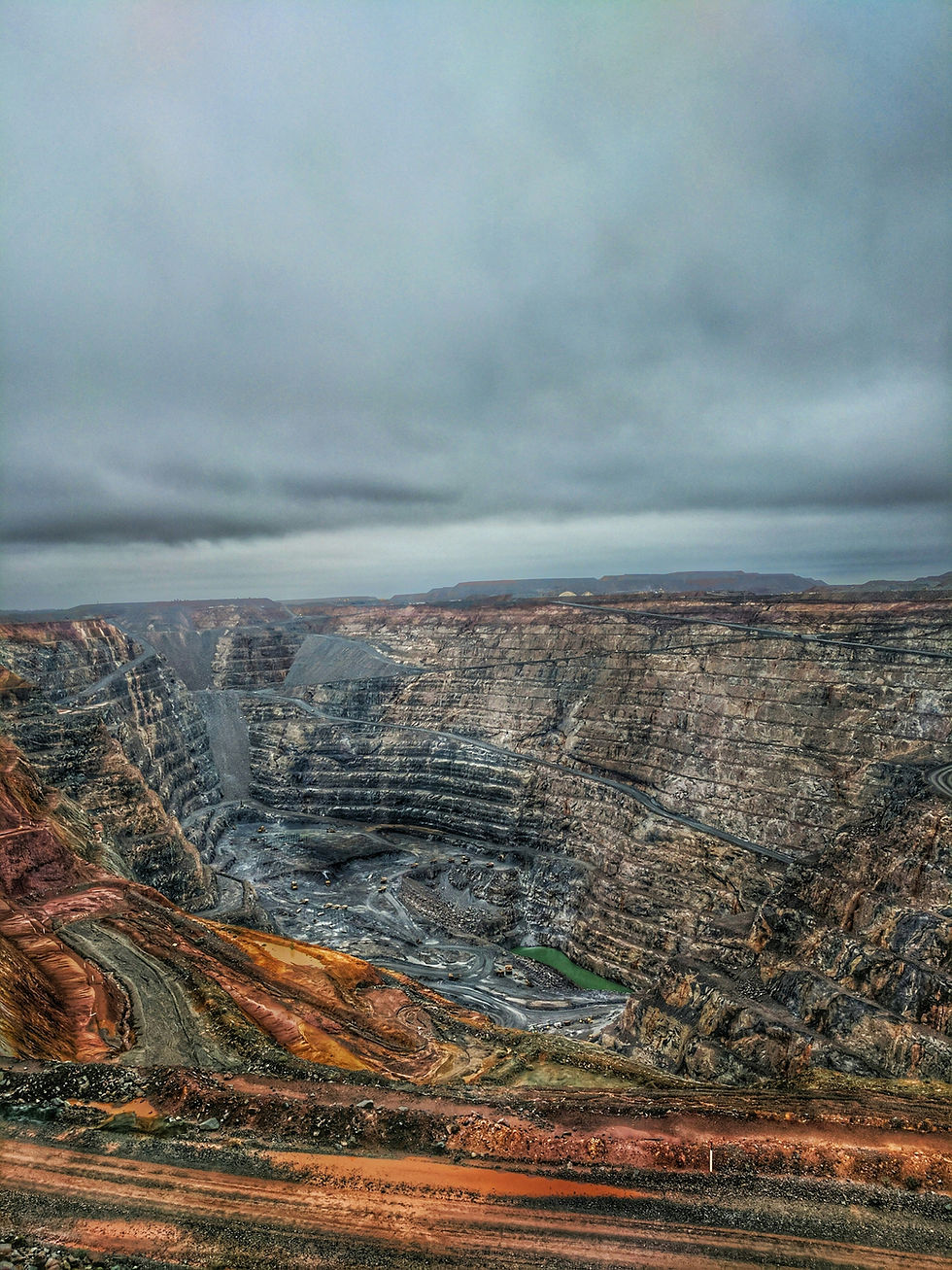
Image sourced from Tiago Claro on Unsplash
The United States (US) and Cuba have long had a fraught relationship. From 19th century debates over whether Cuba should be absorbed in the colonies, to Cuba’s 1959 revolution that saw a communist government installed just 90 miles off the coastline of Florida at the height of Cold War tensions, animosity between the neighbouring countries is not new.
However, 2026 has been a particularly tense year for US-Cuban relations. On January 29, 2026, President Donald Trump issued Executive Order 14380, which claimed that Cuba poses an “unusual and extraordinary threat” to US national security.
Since then, the Trump administration’s foreign policy towards Cuba has become increasingly aggressive. Economic sanctions have ramped up, an effective oil blockade is now in force, and indictments of key Cuban leaders—most notably former Cuban president, Raul Castro—have been handed down.
As Cuba teeters on the brink of economic collapse, the Trump administration appears hopeful that increasingly aggressive policies towards the island nation might finally encourage Cuban leaders to cooperate with US demands — or even make the ever-elusive prospect of regime change in the communist country a reality.
A Country in Crisis
Cuba’s energy shortages and economic woes did not begin in 2026, nor are they solely the result of US intervention.
For years, Cuba had been reliant on Venezuelan oil as a primary fuel source. The capture of Venezuelan President Nicolás Maduro on January 3, 2026 by US forces, and US takeover of the Venezuelan oil sector, therefore spelled disaster for Cuba’s economy. Trump’s executive order from January, which created a tariffs system against any country supplying oil to Cuba, only worsened the situation through imposing a de facto oil embargo.
Today, Cuba is facing ongoing, nationwide blackouts—often now lasting for days at a time. The country’s once-lauded healthcare system is in rapid decline due to shortages in medical supplies. Food insecurity is rising. Tourism, a crucial pillar of Cuba’s economy, has dropped by 58 per cent in 2026, with many airlines suspending flights due to the fuel crisis.
Cuban President Miguel-Diaz Canel claimed that the US was using “economic strangulation” to orchestrate a “calculated genocide”.
Why is the Trump Administration targeting Cuba?
Executive Order 14380 outlines the twofold danger of Cuba for the US; the Cuban government seeks to undermine US national security through intelligence networks and collaborations with “terrorist groups and malign actors”, and also represses its own population. On August 4, Secretary of State Marco Rubio introduced sanctions against individuals and companies allegedly involved in helping to import weapons and military technology into Cuba.
Positioning Cuba as a national security threat serves the Trump administration domestically through legitimising their criticisms of political opponents. On July 20, 2026, the US State Department issued a report claiming that Cuba has historically supported and influenced left-wing groups and politicians within the US.
Furthermore, as negotiations with Iran stall, the Trump administration may view Cuba as an attainable foreign policy achievement—potentially seeking to orchestrate an outcome similar to the capture of Maduro in January.
Whether the Trump administration is vying for complete regime change in Cuba—and the extent to which they are willing to achieve it—remains unclear. Trump has alluded to a “friendly takeover” of Cuba by the US. Senior military leaders appear to be planning for potential military action.
However, the cost of becoming entangled in another potentially lengthy military intervention, even against Cuba’s outnumbered and technologically inferior armed forces, mean this option is less likely to be the administration’s end goal currently.
Rather, the administration may be hoping for a similar outcome to what previous administrations have sought to achieve in Cuba. If Cuba spirals into a humanitarian crisis, it undermines the credibility of the current government. It may provide grounds for the US to intervene to provide aid and logistical support without the inherent risks of military action. Regime change could occur naturally, without the US having to directly facilitate it.
Is the United States underestimating the situation in Cuba?
US-Cuban relations did undergo a brief period of eased tensions under President Barack Obama, who sought to open diplomatic ties between Cuba and the US. As Obama stated in a 2016 speech in Cuba, the decades-long embargo “was not working”—rather, it was “only hurting the Cuban people”.
With Cuba undoubtedly in a more vulnerable position today than it was in 2016, this statement still rings true. However, Cuban leadership has historically managed to weather crises without facing lasting challenges to their authority. US sanctions, rather than creating internal dissent, may only encourage Cuban leaders to unite against the US as a ‘common enemy’.
Increased pressure may also force Cuba to become increasingly reliant on recent allies Russia and China for aid and fuel, an outcome the US is already wary of.
All this could occur while Cubans continue to suffer, facing what an independently appointed human rights committee for the United Nations cautioned could become a “silent Gaza”.
Economic and political collapse in Cuba could also cause a wave of mass migration to the US. In 2025, the Trump administration ended special protections for Cuban migrants by removing their ability to gain temporary legal status. Many Cuban migrants have since been deported, often to other countries as Cuba frequently refuses to accept deportees from the US.
For decades, the United States has sought to exert control over Cuba, largely to no avail. Though Cuba’s current government today faces new and increasing challenges to its survival, achieving regime change in Cuba will likely not be an easy feat.
At best, the US may be able to influence a change in Cuban leadership—with no guarantee that Cuba’s political system will improve in any way. At worst, US pressure will only exacerbate Cubans’ suffering whilst pushing Cuban leaders to consolidate their power.
If the US continues to draw on historical strategies in Cuba, they risk repeating historical mistakes. Cuba has, and will continue, to resist US pressure.
Mia Ruddock is a recent graduate of The University of Melbourne, with a Bachelor of Arts majoring in Politics and International Studies, and History. Throughout her studies, Mia has sought to shape her understanding of the United States’ current domestic and foreign policy affairs through a historical lens, exploring the rise of the United States as a global superpower in the 20th century.
Mia’s research on the United States has combined several multidisciplinary interests, ranging from the United States’ wars in the Middle East in the 2000s, to depictions of political scandals through popular culture. Outside of academics, Mia conducts archival research and writes articles for her university’s student publication, Farrago.
As the United States fellow, Mia hopes to contribute original, thoughtful, and carefully researched analysis to explore the rapidly evolving and unique geopolitical role of the United States today.
Disclaimer: The views and opinions expressed in this article are those of the author, and do not necessarily reflect the views and opinions of Young Australians in International Affairs. AI tools were used by this author for grammar checks, but all content is original, and no plagiarism has been used in the preparation of this article.


Comments