
Africa’s Drug Economy: A Symptom of Exclusion & Crime
Jesse Amoah | Africa Fellow

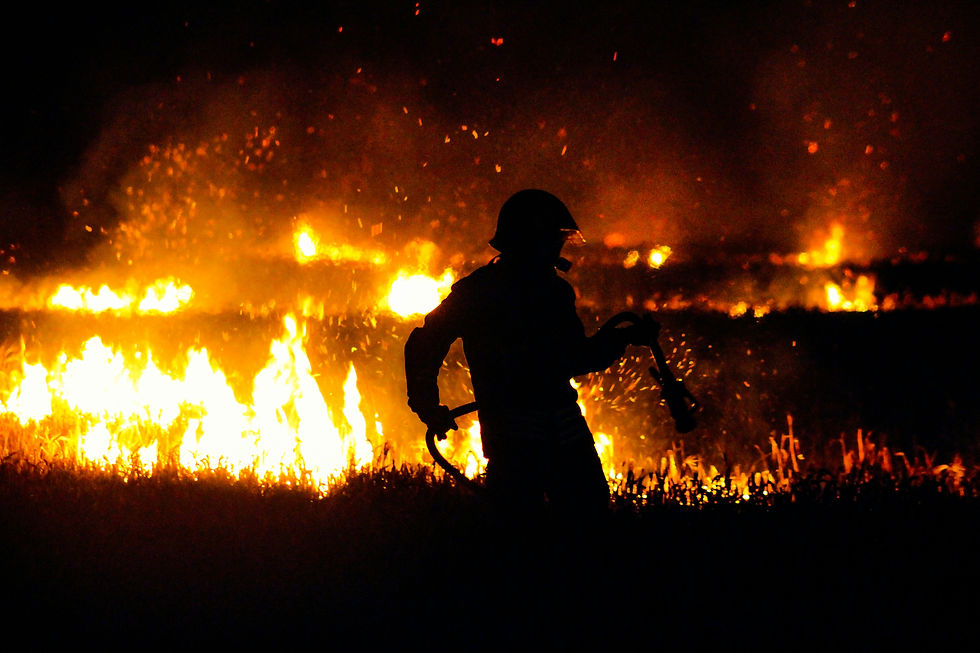
Image sourced from Police 2010 Ready via Wikimedia Commons.
In West and Southern Africa, regional governments and international partners frame the illicit drug economy as a criminal underworld. Yet for millions of young people shut out of formal work, in a region where over 60 per cent of employment is informal, it is a vital lifeline. This shadow economy is not an anomaly but a symptom of systemic failure: underfunded schools, scarce formal jobs, and absent safety nets.
These informal networks form a shadow social contract, replacing lost livelihoods with income and a measure of order at high human cost. Yet state responses remain narrowly focused on arrests and interdiction, treating participation in the drug trade as a moral failing, when for many, it is the last refuge in a system that has excluded them.
African leaders must resist importing the failed logic of the global “war on drugs”. The drug trade is not merely a criminal problem, but a symptom of deep systemic exclusion that demands social and economic reform, not militarised punishment.
The Injustice of Selective Criminalisation
Africa loses an estimated USD$88.6 billion annually to illicit financial flows. Yet, enforcement still falls hardest on users and street‑level sellers rather than on the banks, officials, and political fixers who move and protect the money. The global system that disproportionately targets impoverished couriers while shielding the financiers and politicians behind the trade is the clearest expression of this selective criminalisation.
Governments are now scrambling to contain the fallout, leading to rising overdoses and street violence, shaken communities, and mounting international concern. Yet responses remain primarily punitive with military-run rehab centres, mass arrests, and short-term crackdowns, with state defaulting to enforcement instead of investing in jobs, housing, and sustained care.
Meanwhile, those who profit are untouchable. In Guinea-Bissau, cocaine money has financed political campaigns and security forces, with senior figures indicted abroad for trafficking. This dual injustice, criminalising the poor while protecting the powerful, is no accident. It is the architecture of an order that polices the symptoms of the drug economy while ignoring inequality, unemployment and illicit financial channels that sustain it.
Policy Beyond Moral Panic
Drug policy in West and Southern Africa is too often driven by moral panic: media-fuelled fear that treats drugs mainly as a threat to public order and morality, demanding ever‑tougher crackdowns. If the drug economy reflects exclusion rather than isolated crime, responses must shift from panic to structural reform. That shift is slow, not for lack of evidence, but because short electoral cycles and headline politics reward visible crackdowns over long-term solutions. Arrests and interdiction offer quick wins for pressured leaders, while building jobs and accountable institutions deliver delayed benefits that rarely translate into votes. Researchers and experts have long urged West African governments to address the socioeconomic drivers of the drug trade alongside public health responses, rather than escalating interdiction alone.
Tackling socioeconomic exclusion happens fastest when people can earn. Senegal’s Casamance region exemplifies this: donor-supported agricultural projects and improved infrastructure have created legitimate employment opportunities, drawing youth away from trafficking. Governments and donors must move beyond token training and create genuine earning opportunities through infrastructure that reduces business costs, microfinance that breaks reliance on predatory lenders, and value-chain development that offers alternatives to illicit income. If development and drug policy do not align, they are self-defeating.
Nevertheless, livelihoods can only be effectively protected through institutional fortification. When states fail to provide basic services or fair regulation, illicit actors step into the gap with their own order. Welfare in this context is not mere compassion; it is crime prevention by other means. The evidence is consistent: harm-reduction and health-centred strategies outperform punishment on both public health and public safety.
Altering regional approaches to enforcement will ensure it is no longer viewed as a core failure of the “war on drugs”. Police and courts should refocus on the organisers who sustain the trade, rather than on users and small couriers. DEA operations in West Africa are increasingly focusing on these networks rather than low-level couriers, making enforcement more effective without alienating the communities. Effective enforcement targets networks and money flows, not neighbourhoods or vulnerable youth.
Taken together, these shifts can replace moral panic with practical dignity and treat those swept into the illicit economy not as villains but as excluded citizens. Moreover, they can make the state a credible alternative to the shadow systems that have flourished in its absence.
Reframing the Narrative for Dignity and Inclusion
Policymakers in Africa and beyond must recognise the illicit drug economy as a clear indicator of systemic exclusion. When states fail to provide socioeconomic prosperity or uphold basic dignity, and tax bases narrow, illicit economies emerge not as anomalies but as adaptive survival strategies.
Western moral panic often portrays Africa as a passive victim and the drug trade as an external threat. Yet African voices tell a different story, centred on resilience amid neglect and informal governance, with formal institutions having collapsed.
For Africa’s leaders to chart a new course, they must reject the failed logic of the global war on drugs. Believing that harsher penalties, mass arrests, and militarised crackdowns can defeat demand without changing the conditions that feed it is outdated.
The drug trade is not simply a crime problem but a manifestation of systemic exclusion, demanding reforms that dismantle the structures that deny opportunity and entrench coercion. States can either compete with the shadow systems they have allowed to flourish or continue policing their consequences.
Jesse Amoah is the Africa Fellow for Young Australians in International Affairs. Jesse is completing a Bachelor of Commerce (Finance) and a Bachelor of Laws at the University of New South Wales. His passion for Africa–Australia engagement is grounded in his Ghanaian heritage and shaped by experience across public policy and private markets. As an Africa Fellow, Jesse is committed to strengthening Australia’s strategic and diplomatic ties with the continent. He is particularly interested in how trade policy, diaspora networks, and investment diplomacy can position Australia as a meaningful partner in the African century.
Our 2025 Africa Fellow is sponsored by the Centre for Africa-Australia Relations. For more information, visit their website here.

Disclaimer: The views and opinions expressed in this article are those of the author and do not necessarily reflect those of Young Australians in International Affairs. All content is original, and no plagiarism has been used in the preparation of this article.


Comments