
Africa's Resources, Africa's Future: What the Rentier State Model Could Offer the Continent
Biola Ngang | Africa Fellow

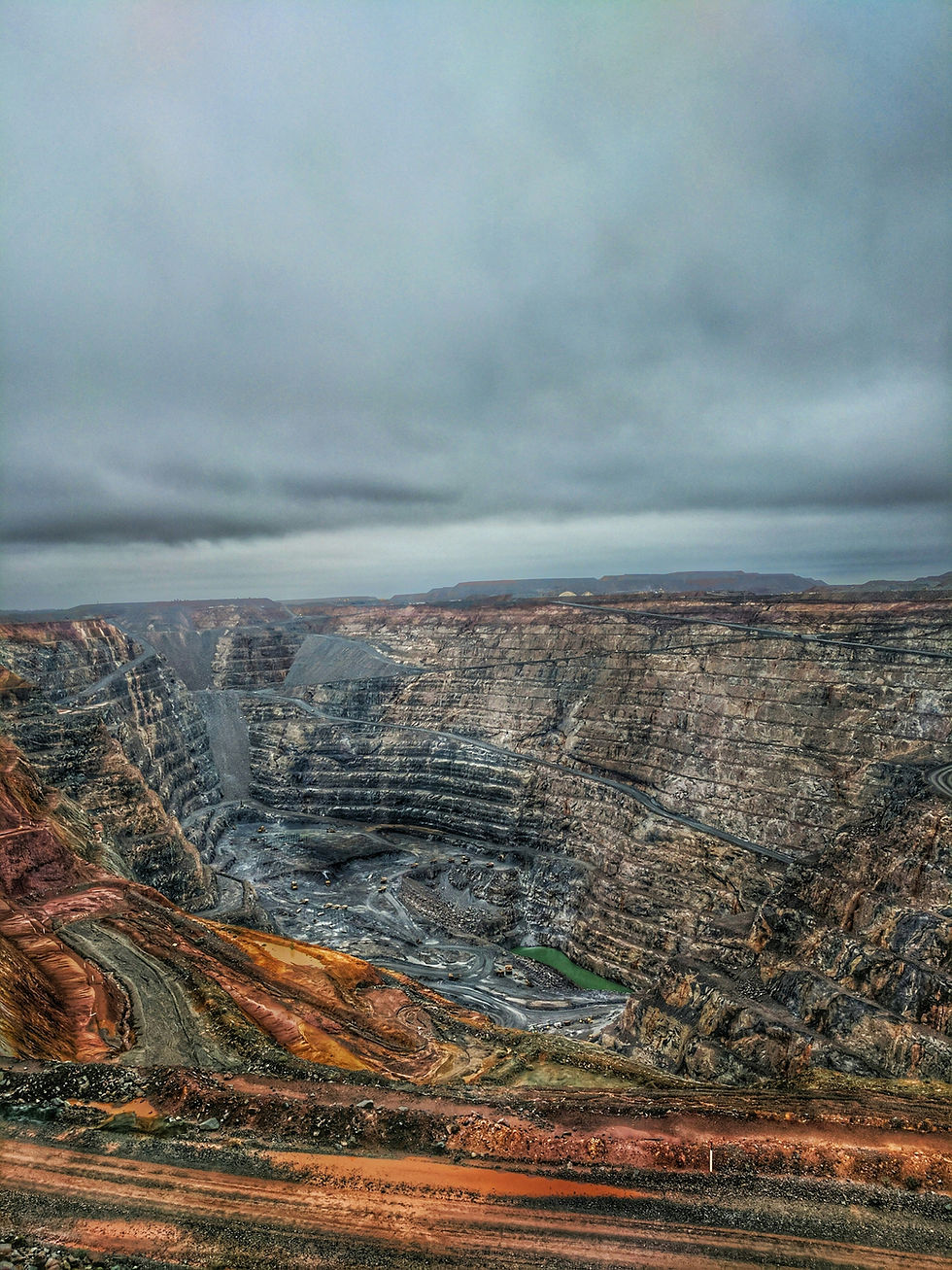
Image sourced from Marlin Clark via Unsplash
For decades, Africa's development has been shaped by external financing. Aid from Western governments, loans from multilateral institutions, and infrastructure agreements with international partners have contributed to real progress across the continent. These relationships have mattered, and in many cases, they have delivered results. But the withdrawal of USAID in 2025, which removed more than a quarter of all official development assistance flowing to Africa, has opened a conversation that is long overdue: what would it look like for Africa to finance more of its own development on its own terms?
This is not a question about rejecting partnership. It is a question about building resilience, and it involves carefully looking at the resources Africa already holds. Central to this conversation is the concept of the rentier state: a state that derives a substantial portion of its national revenue from the rent of indigenous natural resources to external clients, rather than from domestic taxation and production. The question this article explores is whether Africa can draw on that model, learn from both its successes and its limitations, and apply it to build something more durable.
A Familiar Challenge, A Different Moment
Africa's external debt stands at USD$746 billion according to the most recent World Bank and Boston University Global Development Policy Center data. Between 2000 and 2024, Chinese financial institutions committed USD$180.87 billion in loans to 49 African states, the majority financing infrastructure projects. These loans have delivered genuine development gains in many countries. At the same time, the conditions attached to external financing of any kind, whether from multilateral institutions, bilateral partners, or commercial creditors, shape the priorities and pace of development in ways that are not always aligned with what African nations themselves identify as most urgent.
The USAID withdrawal has sharpened this reality. If Africa is to build greater resilience against shifts in external financing, developing more sovereign sources of development capital is an important part of the answer.
What the Gulf Model Demonstrates
The experience of Gulf states offers a valuable starting point. Countries like the United Arab Emirates (UAE), Qatar, and Saudi Arabia used resource revenue to build sovereign wealth funds, physical infrastructure, and economic diversification platforms. Saudi Arabia's Public Investment Fund now manages approximately USD$925 billion in assets, actively investing in education, technology, and non-oil sectors as part of Vision 2030, with a target of USD$2 trillion by 2030. The non-oil sector across Gulf Cooperation Council economies grew by 3.7 per cent in 2024, reflecting decades of deliberate reinvestment from resource revenue into broader economic capacity.
This model is not without its limitations. Scholars and economists have consistently noted that Gulf states have struggled with labour market dependency, relying heavily on migrant workers while citizens are absorbed into public sector employment funded by resource revenue. Economic diversification has proven difficult to sustain, and the broader rentier state literature documents how unearned income can, when not carefully governed, reduce the incentive for institution-building and broader accountability. These are important considerations for how Africa approaches its own model, but they do not diminish the principle that natural resources, strategically managed and reinvested, can serve as a foundation for development rather than simply as an export commodity.
Africa's Resource Opportunity
Africa holds approximately 30 per cent of the world's critical mineral reserves, including 55 per cent of global cobalt, 47.65 per cent of manganese, and significant shares of lithium, copper, and nickel, which are materials central to the global energy transition. According to the International Energy Agency, demand for these minerals is projected to more than double by 2030 and quadruple by 2050, with annual revenues reaching USD$400 billion. African lithium production rose 44 per cent in 2025 alone, and Zimbabwe commissioned the continent's first lithium refining facility in 2026.
Botswana offers a compelling example of the rentier model applied within Africa itself. At independence in 1966, Botswana was one of the ten poorest countries in the world, with a GDP per capita of just USD$70. Through Debswana, a joint venture between the government and De Beers established in 1969 and now recognised as one of the world's most successful public-private partnerships, Botswana channelled diamond revenue into education, healthcare, and infrastructure. By 2022, GDP per capita had risen to USD$7,738. Between 1983 and 2014, mineral revenues were equal to 95 per cent of available mineral rents, meaning the government captured nearly all of the available value. That is a governance achievement as much as an economic one.
Botswana also illustrates the risk of single-resource dependency, with 80 per cent of exports coming from diamonds. The lesson is not simply to replicate the model, but to apply its governance principles more broadly and across a more diversified resource base.
Investing in People
Africa's median age is 19. By 2050, Africa’s population is projected to reach 2.5 billion, making it the fastest growing continent on earth. A young, growing population is an extraordinary long-term asset, but only if it is invested in. Resource revenue, properly governed and reinvested, is one of the most credible mechanisms available to fund that investment without perpetuating the cycle of external dependency.
The governance frameworks to do this well are still being built in many African countries. That work takes time, and it requires genuine institutional commitment. But the direction is clear, and the resources are there.
What the rentier state model offers Africa is not a blueprint to be copied, but a principle to be applied: that sovereign wealth derived from natural resources, when governed well and reinvested strategically, can reduce dependency on external financing, fund the infrastructure and human capital that development requires, and shift the terms on which African nations engage with the global economy. The USAID withdrawal is a genuine challenge. But it is also a moment of clarity. Africa has the minerals the world needs, a young population with extraordinary potential, and a growing body of experience in strategic resource management. What it builds from here depends on how those assets are governed, and for whom.
Biola Ngang is an African-Australian student of International Relations, Business Information Systems and Economics, and a founder of a SaaS company providing governance, compliance, and operational management solutions for not-for-profits and businesses. She also serves as a Board Director on an Australian not-for-profit board and is an alumna of the Emerging Leaders in Australia-Africa Diplomacy (ELAAD) Program. She is particularly interested in Africa's evolving role in global affairs, Australia-Africa relations, and how entrepreneurship, innovation, technology, policy, and financial systems can contribute to the continent's continued transformation and economic development.
Disclaimer: The views and opinions expressed in this article are those of the author, and do not necessarily reflect the views and opinions of Young Australians in International Affairs. AI tools were used by this author for grammar checks and idea refinement, but all content is original, and no plagiarism has been used in the preparation of this article.

Comments