
Australia's Critical Minerals Reserve has No Rule for Allies
Nikko Riazi | Australian Foreign Policy Fellow

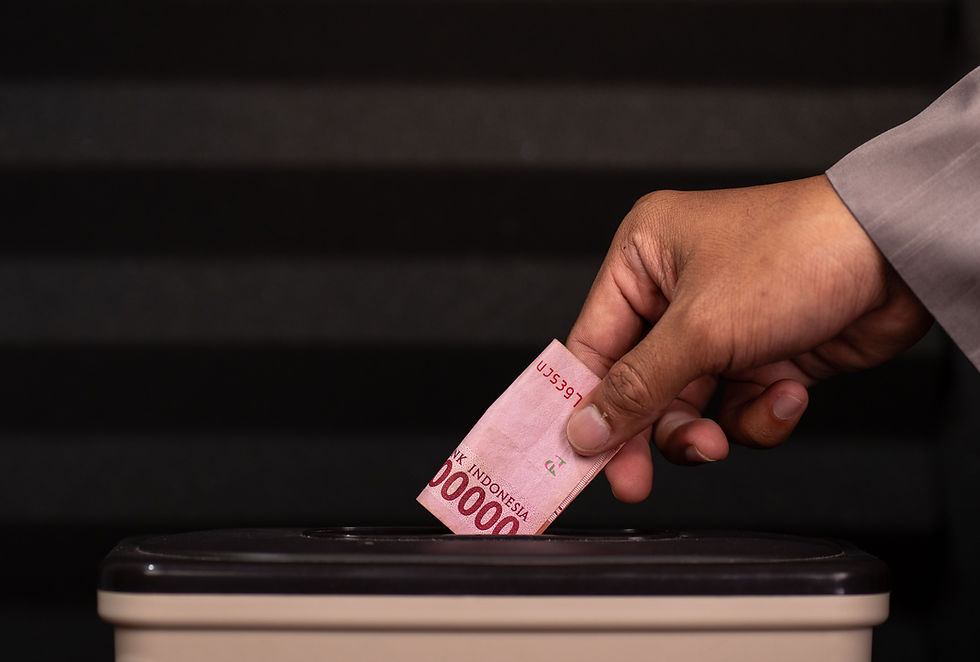
Image sourced from Matthew de Livera via Unsplash
On 10 November, China’s suspended export controls are due to return. When they last applied, they added five rare earth elements to China's licensing regime and extended it to foreign-made products containing Chinese-origin rare earths, putting allied manufacturers at the mercy of one supplier. Australia is rolling out a critical minerals reserve that could ease that pressure, but it has not published a rule on how much material it could make available to allies during a shortage, or on what terms.
Canberra has spent the year building two instruments for this vulnerability, a domestic reserve and a Quad framework that mobilises investment for allied supply chains. What it has not settled publicly is how the two would interact, and that is cheaper to decide now than during the first shock that tests it.
Australia allocated around AUD$1.2 billion to establish a Critical Minerals Strategic Reserve, including AUD$1 billion from the AUD$5 billion Critical Minerals Facility and AUD$170.4 million for stockpiling and operations in the 2026-27 Budget. The Reserve will secure rights to Australian antimony, gallium, and rare earth elements and on-sell them to meet demand from Australian industry and export partners.
The Quad launched its Critical Minerals Initiative in July 2025 and went further in May 2026, when Australia joined the United States, Japan, and India in announcing a framework to mobilise up to USD$20 billion for projects with a Quad nexus, meaning those produced in a partner country or supplying a Quad market. Yet the framework concerns project development and investment, not allocation during a shortage.
The case Japan already ran
In September 2010, a collision near the Senkaku Islands between a Chinese fishing boat and Japanese coastguard vessels exposed the economic risks of dependence on a dominant supplier. Chinese customs agents were reported to have held up rare earth shipments for weeks, while prices for elements Japan used in cars, electronics, and magnets rose sharply.
Japan’s Ministry of Economy, Trade and Industry (METI) had already formalised a Rare Metal Security Strategy 14 months before the collision, covering overseas resource development, recycling, substitute materials and strategic stockpiles. Rather than build a separate institution, the Japan Organization for Metals and Energy Security (JOGMEC) brought these functions into one resource security strategy. In March 2011, JOGMEC and the trading house Sojitz provided Australian producer Lynas Rare Earths with USD$250 million in loans and equity, securing Japan a minimum annual allocation of around 30 per cent of its market for ten years.
Japan’s 2020 International Resource Strategy reinforced that approach, setting a stockpiling target of 60 days while strengthening international cooperation and diversification. By 2020, China’s share of Japan’s rare earth imports had fallen from 85 per cent in 2009 to 58 per cent.
Japan therefore treated stockpiling and supply diversification as parts of one strategy, rather than as separate problems.
Where the seam shows
Australia is now developing both functions across its Reserve and Quad commitments, which makes how the two fit together a live question. The Reserve's purpose includes strengthening supply chains for export partners, with the Department of Industry, Science and Resources listing Canada, Europe, Japan, the Republic of Korea, the United Kingdom, and the United States as collaborators. India, a Quad partner, does not appear on that list, and nothing published explains how an allied processor's claim would be weighed against a domestic one.
That silence is harder to explain given the timing. The Quad launched its initiative while the Reserve was still being designed and set out its funding framework two months after Parliament legislated the expanded role of Export Finance Australia (EFA). Neither step established a link between the two. The absence of a rule matters while the operating model is being settled, since a shock could turn the release of Reserve material into a negotiation under time pressure.
That silence may be deliberate, since leaving that discretion with government preserves flexibility where disruption circumstances or Australia's external relationships make a fixed allocation formula undesirable. Principles for weighing domestic and allied claims could offer certainty without fixing shares in advance. Tying any release to a verified supply disruption rather than a price movement would keep that flexibility while signalling to partners when Reserve material could be released.
Closing the seam
One option is for Quad members to coordinate domestic stockpiling and responses to supply disruptions, drawing on the International Energy Agency's model of coordinated emergency action for oil stocks. Members could also use their export credit agencies to support offtake and strategic projects, building on tools contemplated in the Quad framework and EFA's expanded mandate. In a shortage, this could give allied buyers a shared means of securing supply while giving producers a buyer.
Both approaches would preserve the Reserve's purpose of keeping Australian production viable, but Australia would first need to establish whether Quad nexus projects sit inside the Reserve's protections or are treated as external claims.
Japan began bringing its stockpiling and supply diversification efforts under the same institutional framework in 2009 and spent the following decade building it out, so the approach was already set out when the 2010 disruption exposed the value of integrating the two. With Australia's Reserve yet to operate and the suspension of additional Chinese rare earth export controls expiring on 10 November, Australia has an opportunity to align its Reserve and Quad framework while both are still evolving, making coordination cheaper to design now than negotiate later.
Nikko Riazi is a government relations and public policy professional whose work experience spans banking, healthcare, international trade and investment, infrastructure and the public service.
Her writing has appeared in The Mandarin, the Lowy Institute’s The Interpreter and ASPI’s The Strategist, focusing on Asia-Pacific housing, superannuation and the links between finance and national security.
A former OECD Australian Youth Delegate, she also chairs the Education CHANCES Foundation - a youth education not-for-profit. She holds a Master of Public Policy and Management, Bachelor of Commerce (Economics/Finance) and a Diploma of Languages (French Studies) from the University of Melbourne.
Disclaimer: The views and opinions expressed in this article are those of the author, and do not necessarily reflect the views and opinions of Young Australians in International Affairs. All content is original, and no plagiarism has been used in the preparation of this article. No AI tools were used by this author in the preparation of the article.


Comments