
Feedstock to Fuel: Australia’s Sustainable Aviation Goldmine
David Zhang | Climate & Environment Fellow

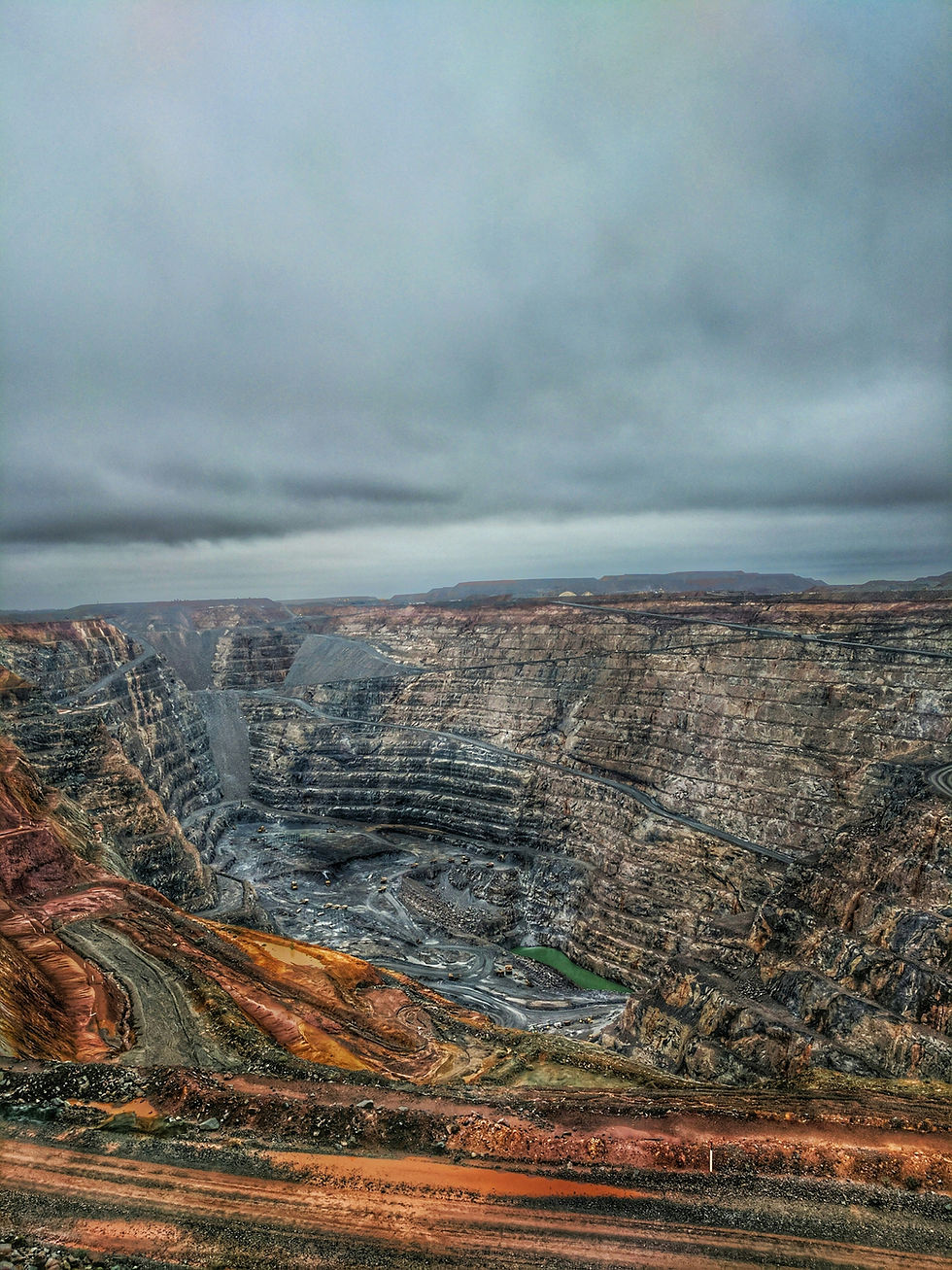
Image sourced from David Syphers via Unsplash
Australia is a country that cannot fly less. Cities are thousands of kilometres apart, and every overseas trip crosses an ocean. Sydney to Melbourne runs more than 50 flights a day each way. Flying is not a discretionary emission like in Europe, where rail competes on time and cost. And yet from January 2027, Australian carriers flying internationally will face an obligation to answer for their emissions.
The compliance clock
International aviation has never appeared in Australia’s emissions accounts. Under the United Nations Framework Convention on Climate Change, it has been handled separately by the International Civil Aviation Organisation (ICAO). From January 2027, ICAO’s ‘Carbon Offsetting and Reduction Scheme for International Aviation’ (CORSIA) becomes mandatory for Australia as one of the 134 participating states, which together cover 85 per cent of 2019 international aviation emissions. Airlines must curb emissions, or pay for above-baseline emissions with carbon credits.
But the second option is getting harder. CORSIA’s next phase tightens eligibility rules, with a credit only counting if the host country also subtracts the reduction from its national tally. This ‘corresponding adjustment’ stops abatement being double-claimed by the host country and the airline that bought it. Host governments have started limiting authorisations as a result, making eligible carbon credits increasingly scarce and costly relative to cutting emissions (‘physical abatement’).
The aviation industry has already banked easy efficiencies, with emissions per seat kilometre improving by 80 per cent since the 1950s. But passenger traffic has grown faster still, so absolute emissions keep climbing. While hydrogen and electric aircraft may eventually close the emissions gap, the planes that will fly in 2027—and likely to 2040—are already built. So, the short-term solution cannot be a new airframe, but it can be new fuel. Sustainable aviation fuel (SAF) is almost chemically identical to conventional jet fuel, and drops into existing fuelling infrastructure without needing new investment. It is the only realistic near-term lever the industry can pull.
Grown here, refined elsewhere
Australia has an abundance of the ingredients SAF requires, from oilseeds and tallow to crop and forestry residues. The Jet Zero Council estimates that Australia has enough feedstock for 117 per cent of its 2030 jet fuel demand. With synthetic fuels—made from renewable hydrogen or captured carbon—remaining far from viability, this bio-based SAF is crucial.
However, almost none of it is processed domestically. Canola crop, for example, is mostly exported to be refined in Europe. Since the 2021 closures of Kwinana and Altona, Australia only has two refineries—neither configured for processing bio-SAF and both reliant on government subsidies. A decade of closures has left Australia importing around 90 per cent of its liquid fuel.
The government has responded on the supply side by committing $1.1 billion to low-carbon liquid fuel production, but few projects have reached final investment. The reason is structural: a refinery is financed against ‘contracted offtake’, where a bank lends only where an end-buyer is committed. No Australian obligation yet requires SAF to be blended into jet fuel sold here, so that buyer does not exist. As a result, a proposal by bp to redevelop the closed Kwinana refinery was paused in 2025 due to construction costs and the absence of any Australian mandate, while a new-build conventional diesel refinery in Western Australia already has buyers under contract. If the least expensive pathway to domestic SAF refining cannot clear the bar, nothing will under the status quo.
The missing market
Governments elsewhere have legislated buyers. From 2027, South Korea will require fuel suppliers to blend 1 per cent SAF into fuel for departing international flights, rising to 3-5 per cent by 2030. Singapore has set the same percentages, but funds compliance through a levy on tickets and cargo.
Under Korea’s model, the obligation attaches to the physical supply of fuel into airports. For Singapore, the levy funds a state company to procure either SAF or ‘carbon attributes’ (the emissions benefit, sold separately from the fuel) from producers worldwide. It can afford this flexibility because its refining position is already competitive, built to serve foreign mandates like ReFuelEU. An Australian plant would chase this foreign demand with none of the industrial base and from further away. Korea’s approach, then, is more suitable: create demand by obligating the fuel be supplied into Australian airports, which domestic producers can compete to fill. Canberra has since moved, beginning consultation on a supplier obligation from 2029. Whether it bites is now a question of design.
An Australian obligation would realistically initially be met largely by imports, since even Korea’s refiners only cover about 80 per cent of their first-year demand. That is what a developing market looks like before economies of scale. Australia’s assets are real, but are slowly wasting: the feedstock is here, and Kwinana is approved. Domestic refining would save the freight of sending feedstock overseas and importing it back as fuel, anchor an industrial hub around the plant, and insulate supply from conflicts overseas. Without one, Australia is sleepwalking into its long-held position on coal and gas of exporting the raw input and buying back its processed product.
From 2027, Australian carriers must comply with CORSIA, and regional demand for SAF will grow regardless. While ambitious, legislating such a domestic obligation represents an exciting opportunity for Australia to expand the domestic value chain, reaping the benefits of refining and becoming a leader of the SAF industry.
David is a final-year Bachelor of Laws student at the University of Sydney, where he has also completed a Bachelor of Economics. He is interested in how economics, law, and international cooperation can be harnessed to confront climate change and drive the energy transition. This is driven by a conviction that a stable climate is not a policy choice but a precondition for basic human rights, aligning with his broader work on First Nations advocacy, refugee support, and gender equality.
He spent three years as an Associate in Commodities and Environmental Markets at the Commonwealth Bank of Australia, helping build carbon markets as a nascent asset class alongside fast-evolving regulation. A semester exchange at the University of Copenhagen studying sustainable development and economic policy offered a working contrast to Australia, showing him an economy centred on environmental sustainability.
Disclaimer: The views and opinions expressed in this article are those of the author, and do not necessarily reflect the views and opinions of Young Australians in International Affairs. AI tools were used by this author for grammar checks, but all content is original, and no plagiarism has been used in the preparation of this article.


Comments