
From “Man on the Moon” to Survival Mode: The EU Climate Action Retreat
Abby Deng | Europe and Eurasia Fellow
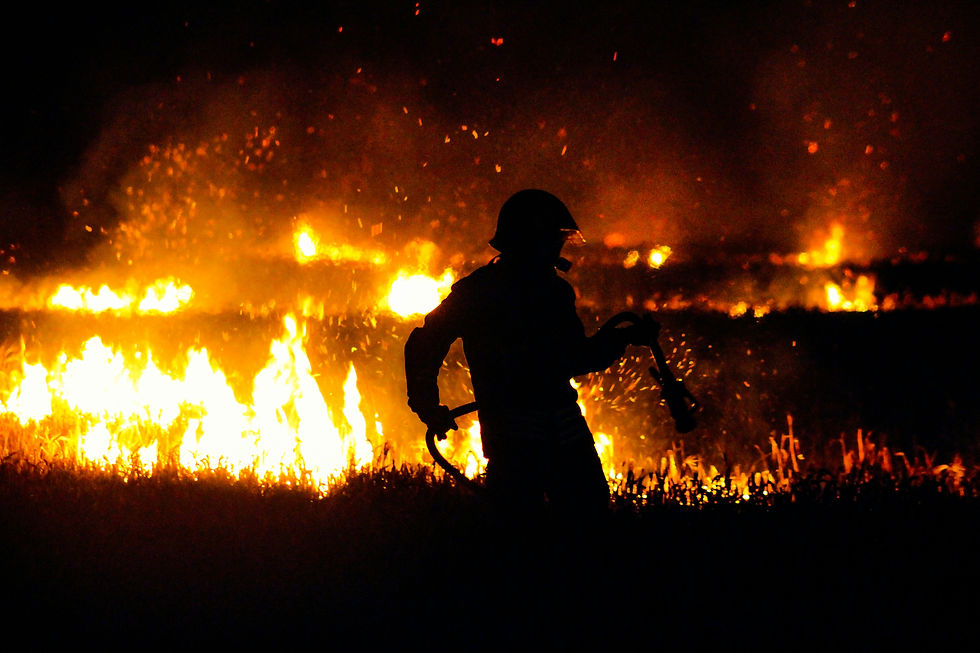
Image sourced from Fabian Jones via Unsplash
The European Union (EU) has long been a global climate leader. The flagship European Green Deal—a comprehensive plan transforming various policy sectors with the overarching goal of achieving climate neutrality by 2050—was launched by European Commission President Ursula von der Leyen in 2019. Touted as Europe’s “man on the moon moment” amid global climate protests, it was a political centerpiece. However, besieged by socio-economic, industrial and political pressures, the EU is dismantling this green craft to quell domestic crises—sacrificing long-term payoffs and ceding its hard-earned leadership in green transition.
Pressures from all Directions
Several drivers underlie the EU’s Green Deal backtracking. First is EU industries’ fear of deindustrialisation from regulatory burdens and unfair trade practices. This is notably driven by China, which dominates clean technology supply chains—manufacturing 70% of global electric vehicles (EVs) and 80% of solar panels—and whose overcapacity and massively subsidised exports of EVs have dealt Europe a “China Shock 2.0”.
Secondly, the rising far right across Europe: the share of Europeans voting for far-right parties in their country’s most recent national elections more than doubled over the past decade, reaching 23.2% in 2026. The far right across Europe has largely shifted from being outright climate-skeptic to propagating discourses of climate delay, framing European green policies as elitist measures that disproportionately affect people who cannot afford the costs of the green transition. This has won them popular support amidst Europe’s cost-of-living crises.
Thirdly, the EU also faces budgetary shortfalls driven by major member states’ deficits and contentious negotiations over the next €2 trillion EU budget (2028-2034), where member states like Germany are pushing for hundreds of billions in contribution cuts.
The Green Deal's Great Rollback
Besieged by these pressures, seven years on, the Green Deal’s political momentum has stalled, and the EU is increasingly backtracking on commitments. In February 2025, prioritising competitiveness, the EU’s sustainability “Omnibus” drastically raised the Corporate Sustainability Reporting Directive compliance threshold to high-turnover enterprises with over 1,000 employees (up from 250). The December 2025 Automotive Package diluted the 100% emission reduction target for new vehicles to 90%, allowing internal combustion engine cars to be sold beyond the original zero emission target of 2035.
In July 2026—amid a dystopian summer of wildfires and recurring heatwaves, with homes, schools, and hospitals resorting to makeshift materials to heat-proof their windows—the EU backtracked on its Emissions Trading System (ETS). Despite this carbon market—the world's largest—reducing emissions 47% by 2023 compared to 2005, the reform proposes to “slow the clock” with its targets to reduce heavy industry carbon emissions. Furthermore, the proposal to use international carbon credits from 2036 effectively gives heavy industries the opportunity to continue business as usual by purchasing credits from outside Europe. Further, the introduction of ETS2 (a brand-new carbon market targeting EU residents by pricing road transport and building heating pollution) was delayed to 2028, amid cost-of-living crisis fears.
A Fading Green Leader and Shockwaves in Global Climate Diplomacy
The EU’s backtracking has profound implications for its green leadership and global climate diplomacy at large. Having fallen behind the United States (US) and China in Artificial Intelligence and space exploration, climate action remains one of the EU’s few remaining standard-setting arenas. However, as the EU backtracks, it loses the ability to shape international sustainability standards and the moral authority it once held to pressure the Global South for greater climate efforts. This shifting dynamic already emerged ahead of COP30: China, the world’s largest emitter, rejected the EU’s climate criticism, calling the bloc’s new targets insufficient and its accusations “double standards”.
On the financial front, the EU is currently the largest climate finance provider to developing economies, but its shifting priorities will undoubtedly impact this funding. For example, Polish Deputy Climate Minister Krzysztof Bolesta recently called for the EU to be more “transactional” in conversations with external partners, a sentiment echoed by the French Environment Minister Monique Barbut, who threatened to block €500 million in green transition funding to India under the EU-India trade agreement until New Delhi submits a national plan to cut planet-warming emissions. This domestic backtracking and increasingly transactional external posture are two sides of the same coin: besieged by competing pressures at home, the EU increasingly weaponises financial aid and market access to force emerging economies to share the bill for climate action.
Looking Ahead: Surviving and Adapting to a Warmer Reality
The 2019 Green Deal is fracturing as the EU struggles to simultaneous achieve emissions targets, industrial competitiveness, and strategic independence.
In this recalibrated Green Deal landscape, political framing has changed from “climate leadership” and “ecological transition” to “simplification” and “competitiveness.” This has direct policy implications: the 2026 Q4 European Integrated Framework for Climate Resilience presents a sweeping shift from curbing climate change (mitigation) to surviving it (adaptation). Tellingly, the framework plans for a 3°C global warming trajectory—a stark departure from early Green Deal pledges to keep warming below 1.5°C.
Still, it would be remiss to declare the Green Deal entirely dead, as the net-zero target for 2050 remains legally binding. However, as the EU turns inward toward immediate political and economic concerns, it risks ceding its green leadership to other economies like China, which is on track to peak carbon emissions well ahead of its 2030 target.
Abby Deng graduated from the University of Sydney with a Bachelor of Commerce. She has participated in study trips in Spain and Germany, as well as in an English teaching assistant program in France, where she served as an ambassador representing Australia. These experiences further deepened her interest in international affairs and cooperation, leading her to further pursue a Master's in Management at Emlyon Business School in France.
As the Europe and Eurasia Fellow, Abby is passionate about playing a part in building stronger ties between Australia and the region. By drawing on her grassroots experiences—from extensive backpacking and local immersions to consuming regional media—she is committed to fostering a more nuanced, mutual understanding across Europe and Eurasia.
Disclaimer: The views and opinions expressed in this article are those of the author, and do not necessarily reflect the views and opinions of Young Australians in International Affairs. AI tools were used by this author for grammar checks only, but all content is original, and no plagiarism has been used in the preparation of this article.


Comments