
Fury Road: Water’s Watershed Moment
Mikey Glover | Climate and Environment Fellow

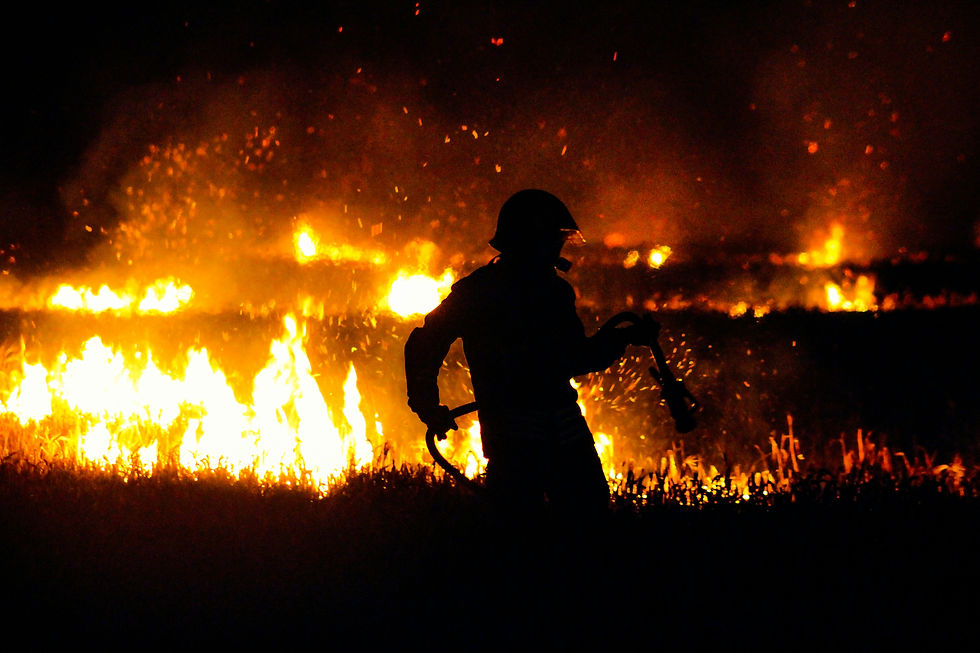
Image sourced from Jordi Orts Segalés via Unsplash
Declaring Bankruptcy
Even more than money, we cannot live without water. It is intrinsic to our wellbeing for drinking and sanitation, and civilisation for agriculture and energy. Yet, roughly half of the global population, and 50 of the 100 largest cities, face water scarcity, including Beijing, New York, Rio de Janeiro, and London. In a landmark 2026 report, the United Nations (UN) declared “global water bankruptcy”. Water “stress” or “crisis” are no longer appropriate nomenclature. Rather, visualised like a savings account, “bankruptcy” conveys that persistent human over-withdrawal of renewable water flows (income) and from long-term natural storage (savings) have exceeded natural replenishment so much so that water systems–rivers, wetlands, glaciers–are now irreversibly damaged.
Freshwater demand has increased more than twice the rate of population growth over the last century. Urbanisation and industrialisation have coincided with deteriorating infrastructure, weak regulation, and water-hungry (thirsty?) development projects like data centres. Climate change also acts as a force multiplier, “like a recession on top of bad management”: rising temperatures disrupt rainfall, shrink glaciers, and worsen droughts and floods. Increasingly challenging farming requires greater crop irrigation, creating feedback loops. This combination of human and human-induced natural amplifiers have caused widespread surface water, glacier, and groundwater depletion. 410 million hectares of wetlands have disappeared since 1970–approximately the size of the European Union, with over US$5.1 trillion in lost ecosystem services.
The Water Wars
Beyond devastating ecological degradation, there are equally destructive consequences for us. Agriculture accounts for roughly 70% of freshwater consumption. Yet, over half of global food production is located where water storage is declining and land is degraded, exacerbated by increasing droughts. Freshwater quality degradation from pollution and salinisation further limits water for drinking, sanitation, and agriculture. Water insecurity, undermined food production, and natural disasters all fuel forced migration, which pressures food security and prices, employment and social cohesion, and sparks geopolitical instability.
This is complicated by the fact that most freshwater systems lie across national borders. Countries have historically cooperated on water allocation, quality protection, and hydropower. However, water-related conflict is rising: ~20 conflicts were reported in 2010, 99 in 2017, and 420 in 2024. Despite 145 countries sharing basins, only 24 reported freshwater agreements in 2020. Even then, agreements can be inadequate or contested. For example, the Nile Basin sits within the Middle East and North Africa region, which contains 15 of the 20 most water-scarce countries. While the Nile River flows through 11 countries, Egypt and Sudan have long claimed allocation rights to its waters under a 1959 agreement that the other riparian states are not a part of. Tensions emerged in 2011 when Ethiopia began construction of the Grand Ethiopian Renaissance Dam (GERD) upstream on the Blue Nile to bolster economic development and electricity generation. Negotiations between Cairo and Addis Ababa failed to produce a water-sharing agreement, and Egypt–which draws nearly 98% of its renewable freshwater from the Nile–described the GERD as an existential threat to its downstream supply. Egypt contends that the dam gives the Horn of Africa control over (and the capacity to weaponise) the Nile’s flow to downstream states, and accused Ethiopia–which is landlocked–of using the GERD as regional leverage to gain access to the Red Sea. Egypt has opposed such access, and signed military agreements with Somalia to counter. Ethiopia’s recent announcement of plans to construct three more dams has inflamed tensions to the edge of armed conflict.
These tensions demonstrate the role of the political context: control over the shared water resource shifted away from Egypt and the 1959 agreement as Ethiopia grew in size and economic power, and leveraged its upstream exploitation capacity.
This example is not unique either, with relations between India and Pakistan worsening over the Indus River Treaty. Transboundary tensions are being amplified by water scarcity and the compounding burdens of climate change, population growth, and economic development. With the recent UN declaration of water bankruptcy, it is clear that existing governance (or lack thereof) is no longer fit for purpose. While Australia’s own freshwater supply is self-sufficient, it is not immune from the rising pressures of population growth and urbanisation, agriculture and energy, and climate change. More still, as the US/Israel-Iran War has affirmed, Australia is certainly exposed to global geopolitical instability.
Watersheds Start From the Top
Despite being a transnational issue, there is no comprehensive global water governance framework: no treaty, enforcement institution, or dispute resolution mechanism. While bi/plurilateral agreements and domestic initiatives to improve water security are important, there must also be greater international coordination. The UN suggests developing a global water bankruptcy monitoring framework, increasing financing for water-related initiatives, and preventing further water depletion and adapting to changing availability. Water is increasingly gaining prominence in climate discussions, including at COP30 and the African Union’s February 2026 summit. The UN will host the 2026 Water Conference in December in the United Arab Emirates, aiming to develop the 2023 ‘Water Action Agenda’ and increase water infrastructure investment, strengthen multilateral governance, and elevate water as a global priority.
While progress is being made, the UN report’s message was clear: water systems are failing. Alongside environmental degradation, water scarcity threatens to undermine food and energy security, displace communities, and escalate international instability. In a previous article, I explored how multilateral gridlock results from countries’ disparate interests. Water security, on the other hand, is fundamentally common. At a time of global division, let it be a powerful bridge in the global environmental agenda.
Mikey is a recent graduate of the University of Sydney with a Bachelor of Laws and Bachelor of Science. He has a strong interest in climate governance, international environmental law, and Australia’s role in shaping cooperative responses to transnational environmental challenges.
His academic work has focused on international environmental frameworks, including plastics regulation, water governance, and global climate litigation. As a research assistant with the Australian Centre for Climate and Environmental Law, he investigated how legal and non-legal mechanisms can protect and restore natural ecosystems.
Mikey also studied in Shanghai at the East China University of Political Science and Law,
deepening his interest in China’s climate transition and the implications for Australia–China environmental cooperation.
Through this fellowship, Mikey hopes to further explore how environmental diplomacy and governance can support a resilient, sustainable, and equitable Asia-Pacific.
Disclaimer: The views and opinions expressed in this article are those of the author and do not necessarily reflect those of Young Australians in International Affairs. All content is original, and no plagiarism has been used in the preparation of this article. AI tools were used for organising initial ideas.


Comments